




Is Your Candle Toxic? Here's What to Look For
You spend time reading food labels. You scrutinize your skincare ingredients. But when was the last time you thought about what's actually inside your candle?
Most people don't. And we get it, candles feel harmless. They smell beautiful. They set the mood. But what burns in your living room doesn't stay in your living room. It goes into your air, into your lungs, and into the bodies of everyone in your home.
Here's what you need to know.

What Are Most Candles Made Of?
The majority of candles on the market, including many popular well-known brands, are made with paraffin wax. Paraffin is a byproduct of petroleum refining. When burned, it can release compounds including toluene and benzene, both of which are considered harmful at high levels of exposure.
Beyond the wax, synthetic fragrance oils are another area of concern. Many conventional fragrance formulas contain phthalates, a class of chemicals used to help scent stick and linger. Phthalates have been linked to hormone disruption and are increasingly scrutinized by health researchers and environmental organizations.
The tricky part? Candle brands are not required to disclose the full ingredients of their fragrance blends. That "clean cotton" scent you love? The ingredient list behind it might surprise you.
What Does "Clean Burning" Actually Mean?
You may have seen candles marketed as "natural" or "clean burning" but these terms aren't regulated, which means any brand can use them without meeting a specific standard. So how do you actually know what you're getting?
Here's what to look for on the label or product description:
Wax type: Look for 100% soy wax, beeswax, or coconut wax. These are plant-based or natural alternatives to paraffin. Be cautious of blends, a candle can say "soy blend" and still contain a significant percentage of paraffin.
Fragrance transparency: Look for brands that explicitly state their fragrance oils are free from phthalates and parabens. If a brand won't tell you, that tells you something.
Wick material: Cotton or wood wicks are preferable. Avoid candles with metal-core wicks, which can release trace metals when burned.
Why Does Indoor Air Quality Matter?
The EPA has found that indoor air can be two to five times more polluted than outdoor air. We spend the majority of our lives indoors, sleeping, eating, and unwinding. The products we burn, spray, and diffuse in our homes contribute to that air quality in ways that accumulate over time.
A candle burned occasionally is unlikely to cause serious harm on its own. But if you're burning candles regularly, as many people do for ambiance, relaxation, or aromatherapy the quality of what you're burning matters. Especially in smaller, less ventilated spaces like bedrooms.
What We Do Differently at Concrete Poppy
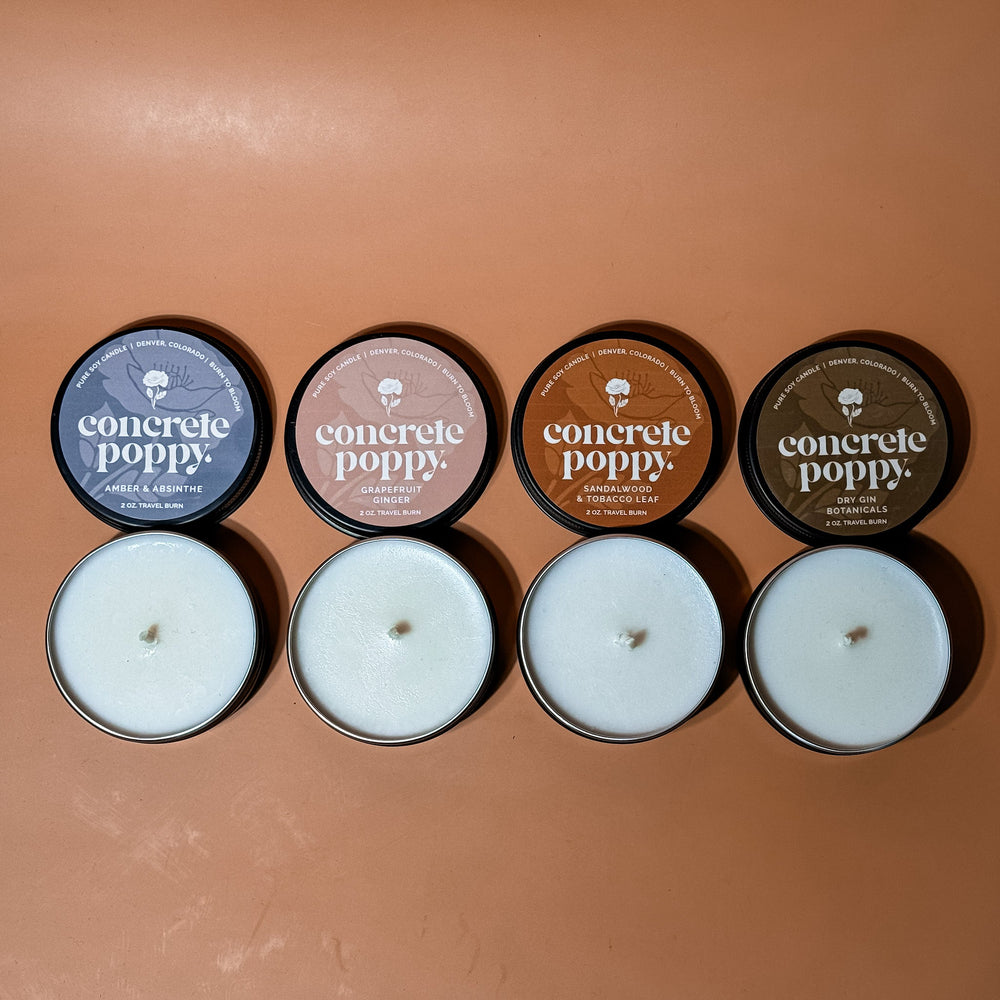
At Concrete Poppy, we believe your home aroma should be as intentional as what's on your plate. That's why every candle we make uses 100% soy wax and fragrance oils that are free from phthalates and parabens.
We're not interested in cutting corners on ingredients to hit a price point. We want you to light a candle and feel genuinely good about it, not just because it smells amazing, but because you know exactly what's going into your air.
Clean fragrance isn't a trend for us. It's the foundation we were built on.
The Bottom Line
Not all candles are created equal. If you're someone who cares about what goes into your body and your home, it's worth extending that same scrutiny to the candles you burn. Look for transparent ingredient disclosure, plant-based wax, and phthalate-free fragrance.
Your home should be a place you can breathe deeply. Make sure what you're burning supports that.
non toxic candles, paraffin wax candles, clean burning candles, indoor air quality